- They say
the verdict shows the system works
- In fact
- eight years shows it does not
Manchester City lost. So did the Premier League
It took eight years to reach a verdict on Manchester City. The next case this size belongs with a regulator that can demand the evidence on day one.
By Jenson IvesFiled under Sport5 min
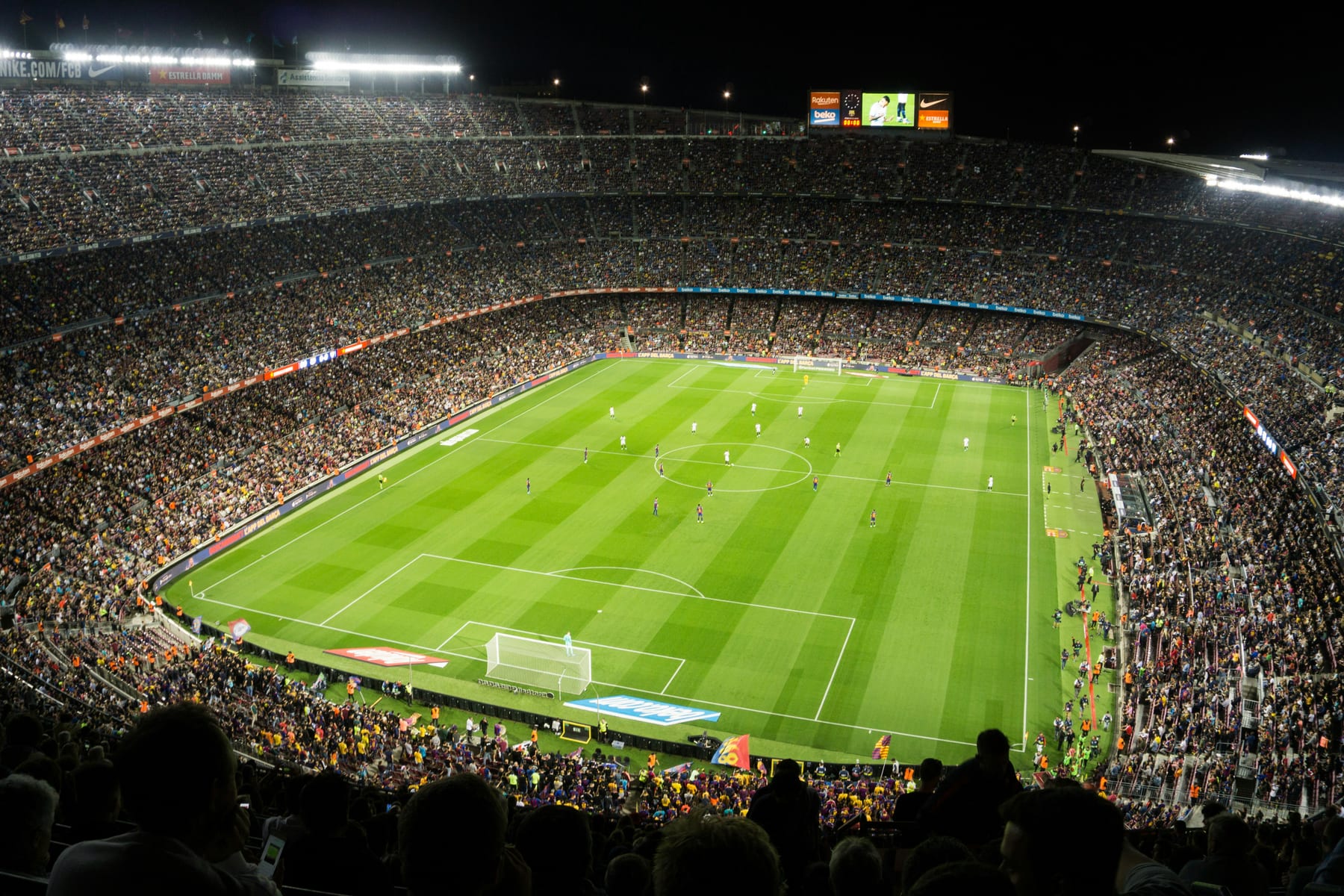 Krzysztof Dubiel / Unsplash
Every Manchester City fan knows the time: 93:20. That was the moment in May 2012 when Sergio Agüero scored against Queens Park Rangers to win the club its first league title in 44 years.
It was also scored inside the nine seasons at the heart of the case the Premier League has finally won. On Tuesday the league confirmed that an independent commission had found City guilty on 114 of 115 charges. Its chief executive, Richard Masters, said the ruling showed how the club “systematically broke” the league’s rules for nearly a decade. Sanctions are still to come, and City are expected to appeal.
The arguments now will be about asterisks, points and relegation. They matter less than the number that should embarrass everyone involved: eight. That is how many years it took to reach a verdict. A league that needs most of a decade to establish the facts about its own champions has proved it cannot police its members’ money. The next case of this size should belong to the regulator Parliament created last year.
Start with the chronology, which is its own indictment. The league opened its investigation in December 2018, after the German magazine Der Spiegel published allegations of wrongdoing. Charges arrived in February 2023. The hearing ran from September to December 2024. The ruling came in September 2026. In the meantime City won five more league titles and a Champions League, and twice the league handed its trophy to a club it had formally accused of breaking its rules. Before this season began, Masters admitted the case was taking longer than anyone had expected.
Then look at what the charges were. Thirty-five of the 115 were for failing to cooperate with the league’s own investigation, and the commission upheld almost all of them. That is the tell. The Premier League is, in the end, a company owned by its 20 clubs. It has no statutory power to compel evidence; when a club resists, it must fight through tribunals and then add charges for the resistance. When Everton broke the spending rules, and admitted as much at their hearing, a commission docked them ten points eight months after they were charged. Speed, in other words, depends on the defendant. A system that moves at the pace its richest member chooses is not much of a system.
The Independent Football Regulator has the powers the league lacks, and they came into force last December. It can issue legally binding demands for information. Giving it false information, or destroying documents it has requested, is a criminal offence, and its investigators can enter premises under warrant. Those are the tools of a financial regulator, built for exactly the problem this case exposed.
History says the alternative is not fantasy. In May 2006, police wiretaps exposed Juventus executives trying to influence which referees took charge of matches; by July the club had been stripped of two titles and relegated to Serie B. In April 2010, Australia’s National Rugby League stripped the Melbourne Storm of two premierships on the day it confirmed five years of secret payments outside the salary cap. In November 2019, after a nine-month investigation, Saracens, champions of England and Europe, were docked 35 points; by January their relegation had been confirmed.
None of those clubs was destroyed. Juventus were champions again by 2012 and went on to win nine titles in a row. What swift punishment protected was the thing Masters says he cares about: the belief that the table means something while it is still being played for. Italy’s parallel criminal case shows the alternative. It crawled through the courts until 2015, by which point the statute of limitations had run out on its central charges.
To be sure, due process is not a loophole. City denied everything and were entitled to fight, and financial evidence stretching back to 2009 takes time to test. The Storm confessed and Saracens dropped their appeal, which is partly why both cases moved fast. Haste has costs, too: Everton won four points back on appeal because the commission had made legal errors. And Parliament drew the regulator’s remit narrowly, around clubs’ finances, ownership and governance, leaving the league’s own rulebook with the league.
But those are arguments for designing the handover carefully, not for leaving things as they are. A process can be both fair and fast when the investigator can demand the ledgers at the start, rather than charging a club years later for withholding them. Even City, responding to the verdict, said it had trusted the league to act as an “impartial and fair minded regulator”. On that, at least, the club and its critics agree: football’s biggest cases need an umpire that is not owned by the teams. Ministers should widen the regulator’s remit so that the next investigation of this size begins there.
Agüero’s goal cannot be unscored, and no ruling will erase what it felt like to be in the ground that afternoon. But football should never again make its fans wait 14 years to learn what sat behind the moment. The next 93:20 deserves a verdict while people still remember where they were.
The strongest case against
A defender of the Premier League would say the eight years prove the system worked. The league took on its most powerful member, refused to settle and won 114 of 115 charges before an independent commission. Handing enforcement to a statutory regulator would invite ministers into sporting discipline and duplicate a process that has just delivered.
City’s side would add that the regulator’s compulsion powers were built for monitoring clubs’ financial health, not for prosecuting historic rule breaches. Criminal-style powers, they would argue, are disproportionate in a sporting dispute.
The empirical dispute: whether cases like this are slow because the investigator is weak or because the evidence is genuinely complex. The Storm, Saracens and Everton all confessed or stopped fighting, so none is a perfect comparison for a club that contested every charge.
Sources
- Premier League response to the ruling, via LADbible, 29 September 2026: Masters’s statement
- Insider Sport, 25 September 2026: the verdict, the charges’ scope and when the investigation began
- Bleacher Report, 25 September 2026: Masters on the delay; City’s statement
- ESPN, 2024: breakdown of the 115 charges; the Der Spiegel allegations
- Sports Mole: hearing dates, September to December 2024
- Morgan Lewis, March 2026, and Skadden, May 2026: the regulator’s information and enforcement powers
- Clarke Willmott: investigatory powers in force from 12 December 2025
- Pinsent Masons: the regulator’s remit
- The Guardian, via PressReader and Capital FM: Everton’s charge, sanction and appeal
- NRL.com, 22 April 2010, and Illawarra Mercury: the Storm’s sanctions and confession
- Rugby World, Reuters via Eurosport and RugbyPass: the Saracens timeline
- Wikipedia: Calciopoli, Reuters via TNT Sports and Forza Italian Football: Juventus’s sanctions and the criminal case
Written by Jenson Ives · 29 September 2026
The archive